Dia de los Muertos: A Vibrant Celebration of Life
Story and photos by Eryn Reddell Wingert
It’s a colorful time of year in South Texas. Bougainvilleas are in bloom, birds and butterflies are migrating, and Dia de los Muertos celebrations are plentiful.
Dia de los Muertos, or Day of the Dead, is a more positive take on death. Celebrated in Mexico and commemorated November 1 and 2, the holiday pays homage to the dead, celebrating the belief that life continues after death.
In the weeks leading up to Day of the Dead, cities, schools and museums across the Rio Grande Valley commemorate the holiday with festivals, exhibits, and artistic expressions.
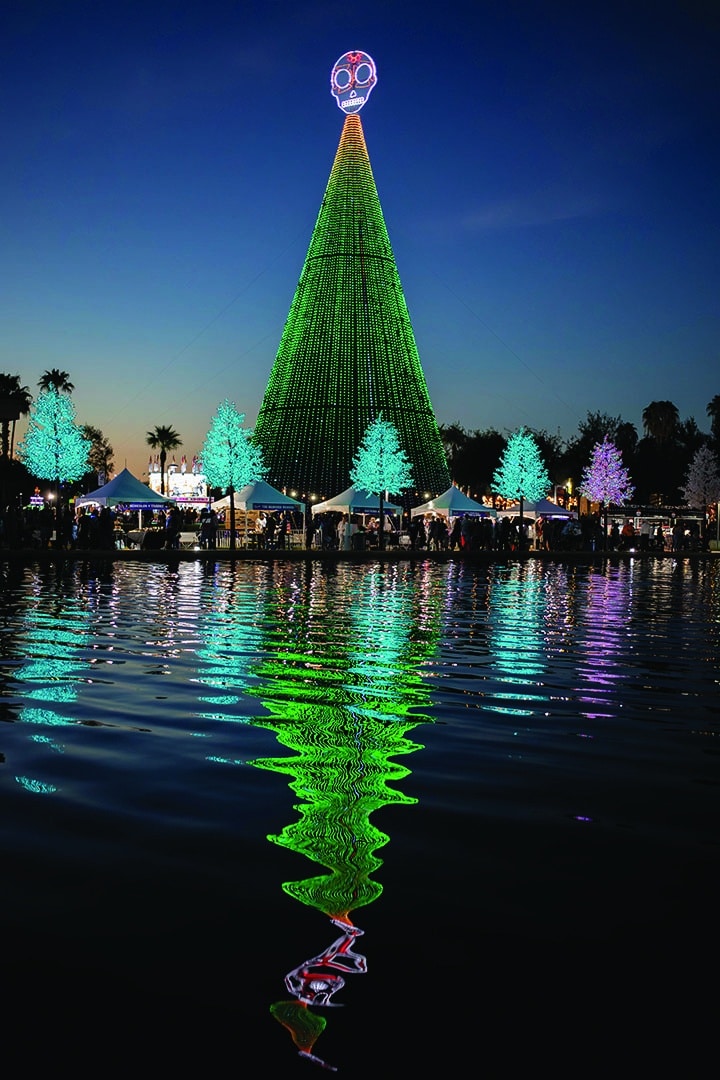
McAllen’s recent Fiesta de Palmas, a centennial celebration turned cultural and historical festival, incorporated Day of the Dead performances and symbolism in the three-day event–the most visible, a 64-foot Christmas tree with a digital display and an illuminated calavera (painted skull) topper.
While Dia de los Muertos is steeped in thousands of years of Mesoamerican, Aztec, and Mexica culture, skulls and skeletons were only injected as symbols in the 20th century. The most notable, La Catrina, depicts a skeletal woman wearing a large hat adorned with flowers.
The original La Catrina is a remnant of an early 1900 political etching by printmaker Jose Guadalupe Posada of Mexico City. According to the Posada Art Foundation website, he created her mere months before his death.
Posada’s skull and skeleton etchings were created as political satire, driving home the message: in the end, we are all equal.
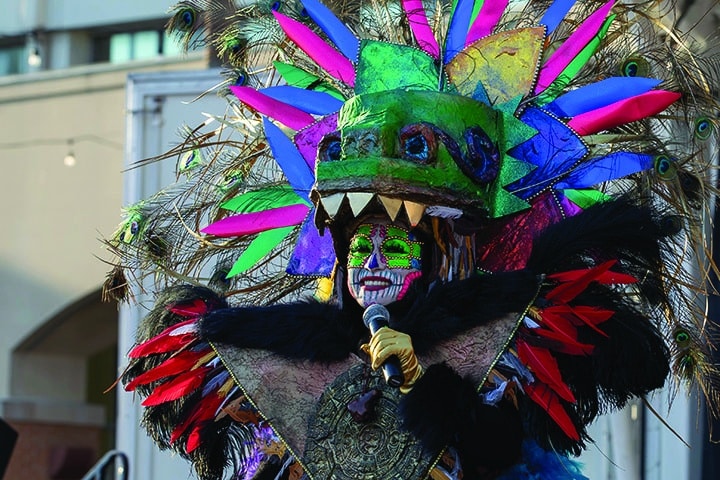
Wendy B. Lara of Reynosa, Tamaulipas, Mexico, has performed as a Catrina for the past seven years. Lara was one of seven Catrinas to perform at Fiesta de Palmas, representing the pre-Hispanic feathered serpent deity Quetzalcoatl.
Lara’s goal as a Catrina is to educate. “When I do my performances as Catrina, I want people to know more about our culture,” she said. Her teaching tools: detailed make-up; elaborate costumes (sometimes on stilts); and passionate, expressive monologues.
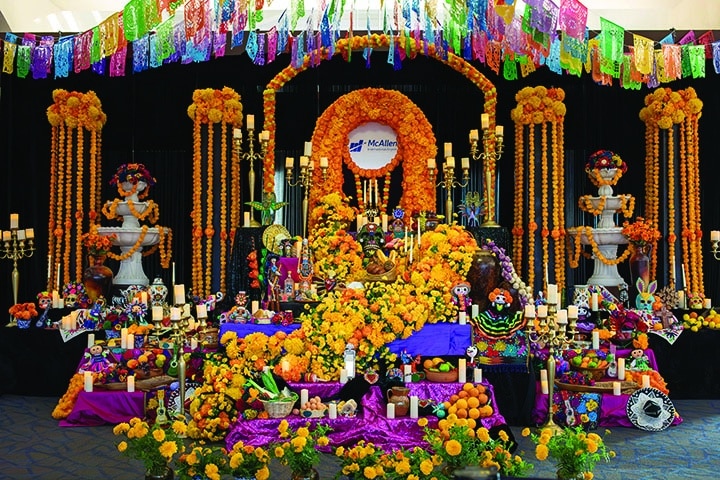
Lara performed one of her monologues at the recent unveiling of McAllen International Airport’s Dia de los Muertos Ofrenda (altar) exhibit.
The vibrant display consists of marigolds–symbolic for their bright orange color, thought to attract passed souls—and a sand painting, also known as Tapete de Arena, that serves as a mat, welcoming the dead to the altar.
The sand painting, titled “Evolution of the Catrina,” was created by Collective Mexico en las Arts of Oaxaca, Mexico. It commemorates the fifth anniversary of the airport’s Ofrenda exhibit.
Ofrendas are traditionally adorned with things associated with the person who has passed—such as food, trinkets, and music–in hopes of enticing them to return during Dia de los Muertos. The altars also honor and commemorate those who have passed on.
This holiday is also a reminder of lives being lived. “Day of the Dead, for me,” says Lara, “is a reminder that, one day, I will also die. But instead of scaring me, the topic of death reminds me that we must live each day intensely, as if it were our last.”